U.S. Senate refuses to limit Donald Trump's powers against Iran
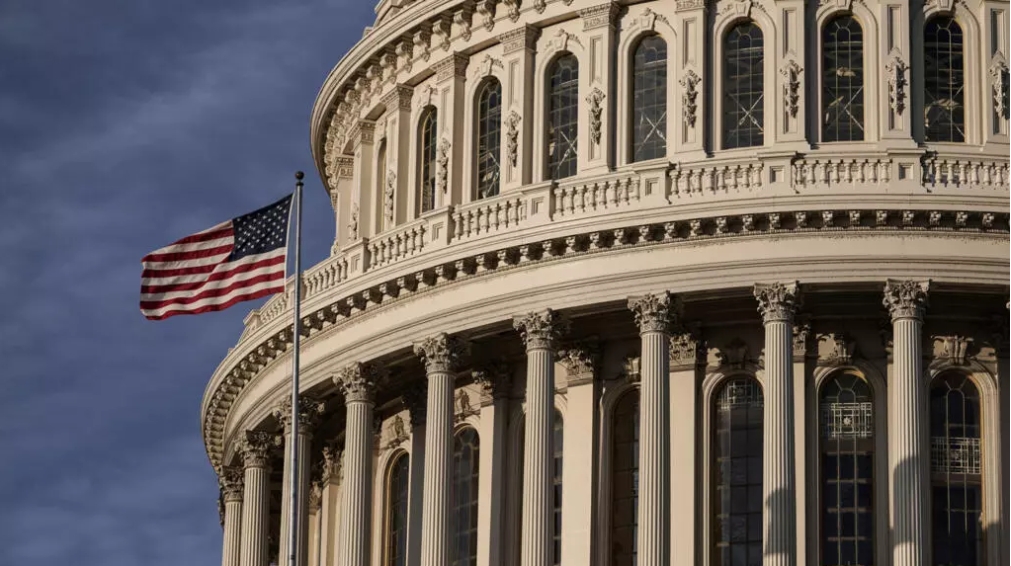
A resolution to limit Donald Trump's powers in the war against Iran was rejected on Wednesday, March 4, in the US Senate, due to the robust support of the Republican majority for the US-Israel operation.
At the end of January, even before the outbreak of the conflict, Democratic Senator Tim Kaine introduced a resolution to "order the withdrawal of the U.S. armed forces from hostilities against the Islamic Republic of Iran that have not been authorized by Congress." But his initiative was rejected with 53 votes against and 47 in favour. As expected, the Republican senators have therefore united behind the White House, reports our correspondent in Washington, Vincent Souriau. Only one conservative elected official, Rand Paul, the libertarian from Kentucky, sided with the Democrats in favor of this resolution. But it was not enough to reverse the balance of power.
Faced with a president who has extended the grip of the executive branch on the legislature since his return to the White House in January 2025, Tim Kaine, alongside many other Democratic lawmakers, said he wanted to reassert the authority of Congress, the only one empowered by the United States Constitution to declare war.
« Americans want President Trump to drive down prices – not to drag us into unnecessary and eternal wars ", said the Virginia senator in a statement on Tuesday, who has denounced since Saturday a conflict launched in an "illegal" way by the Republican.
At the end of a classified briefing on Tuesday between the senators and the head of US diplomacy, Marco Rubio, on the war against Iran, Tim Kaine assured AFP that no evidence had been presented by the government on the existence of an "imminent threat from Iran" against the United States.
A question at the heart of the debate
This question of "imminent threat" is at the heart of the debate on the legality of Donald Trump's outbreak of the conflict. While Congress is the only one empowered to declare war, a 1973 law allows the president to launch a limited military intervention to respond to an emergency situation created by an attack on the United States. In his video announcing the operation on Saturday, Donald Trump had mentioned an "imminent" threat posed by Iran, but did not convince the Democratic opposition on the subject.
In the House of Representatives, a resolution similar to that of Tim Kaine in the Senate is expected to be put to a vote on Thursday, but a failure is also expected. "The idea of us taking that power away from our commander-in-chief, the president, to finish the job is a scary prospect for me," Republican House Speaker Mike Johnson said Monday. "It's dangerous, and I hope and believe that we have enough votes to reject this," he added to the press on Capitol Hill.
Only one scenario seems to be able to move the lines: the hypothesis of mobilizing ground troops. The Republicans indicate that in this case, they will be particularly vigilant and that they will wait for serious explanations from the executive.
After the Senate, it is the turn of the House of Representatives to vote this Thursday on the president's war powers. (RFI. 2026-03-05)